
2026-07-14 · 7 min read
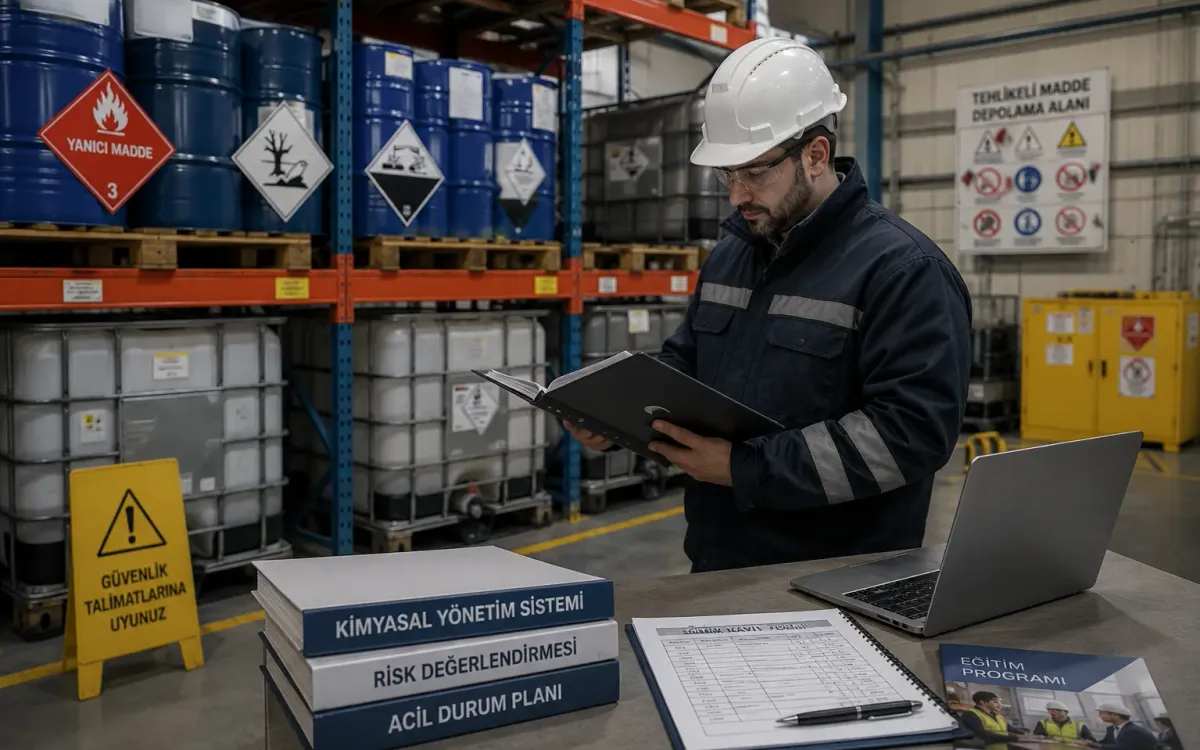
What is a DGSA / TMGD?
A Dangerous Goods Safety Adviser (DGSA / TMGD) monitors and advises on regulatory compliance for dangerous goods processes—especially road transport—and prepares the annual activity report.
Who may be obliged?
In broad terms, companies that produce, fill, pack, load, consign, carry or unload dangerous goods should be assessed for a DGSA obligation. The nature of the activity and quantity thresholds determine the concrete case.
- Sites distributing chemicals, paints, solvents and gases
- Logistics and warehouse operations moving dangerous goods
- Manufacturers that fill, pack and ship
- Companies transporting dangerous goods with their own vehicles
Exceptions and edge cases
Some low-quantity, limited-scope or specific transport scenarios may fall outside the obligation. Assumptions like “we only store, we don’t transport” can mislead—the full activity chain must be read.
- Clarify activity type (production / warehouse / transport) in writing
- Check UN class and quantity thresholds
- Review responsibility boundaries when subcontracting transport
- When unsure, confirm with a DGSA or competent authorities
What does a DGSA do?
The adviser monitors classification and paperwork fitness, recommends training and procedures, supports post-incident improvement and prepares the annual activity report.
- Compliance tracking with ADR / RID / IMDG processes
- Checks on packaging, labels, placards and transport papers
- Annual activity report
- Support for security plans and record discipline
How does KITA help?
KITA delivers DGSA work end-to-end—from obligation assessment to field documentation and annual reporting.